He started having images of his daily life, which includes snapshots of his moms and dads his bedroom his nanny Dudu throwing a ball up into the air his brother leaping off a boat.
Graphic copyright Jacques Henri Lartigue / 2020 Ministère de la Cul
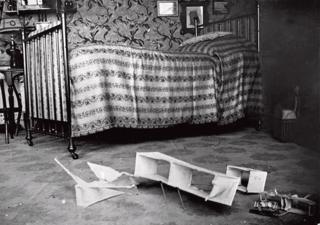
Graphic caption Lartigue’s bedroom, 1906A new reserve by Louise Baring explores Lartigue’s privileged childhood and early occupation versus the backdrop of France’s La Belle Époque, an era of political, industrial and imaginative optimism. Image copyright Jacques Henri Lartigue / 2020 Ministère de la Cul
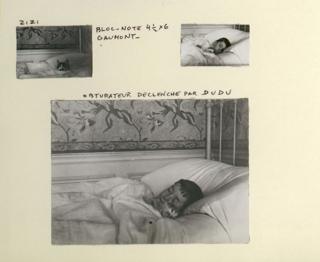
Image caption Lartigue in mattress with his cat Zizi (shutter unveiled by Dudu, the relatives nursemaid), 1904Lartigue went on to photograph his brother Zissou’s inventions, such as a glider lifting off in a gust of wind, and his cousins racing all-around in dwelling-manufactured go-karts. Image copyright Jacques Henri Lartigue
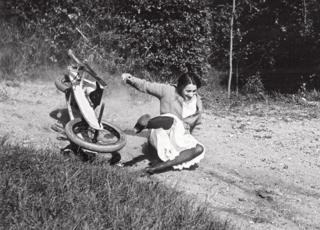
Image caption Simone Roussel, Rouzat, 1913At a youthful age, Lartigue mastered the medium of images using his hand-held Kodak digicam – to start with introduced in 1888 – to harness the immediacy of the snapshot.
Picture copyright Jacques Henri Lartigue
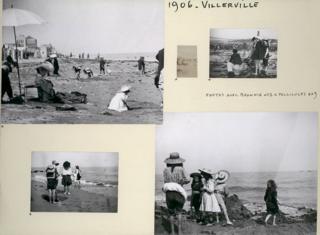
Picture caption Villerville, Normandy, 1906He photographed the social parade in the Bois do Boulogne, a significant park on the outskirts of Paris, in which the fashions of the upper echelons of culture have been displayed. Impression copyright Jacques Henri Lartigue
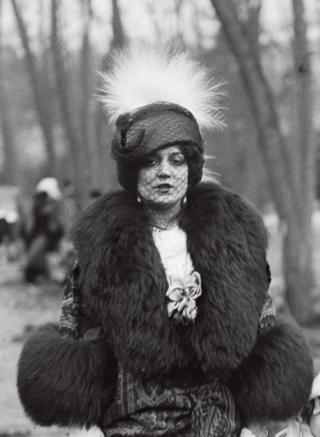
Impression caption Régina Badet, Bois de Boulogne, 1911 Picture copyright Jacques Henri Lartigue
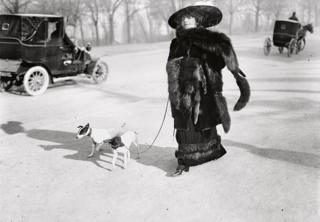
Picture caption Anna la Pradvina, Bois de Boulogne, 1911Other topics included a girl in furs attracting a covetous look from a male passer-by the gleaming traces of a racing vehicle winter sports activities in Switzerland and summers on the seashores of Étretat and Trouville, in which, he wrote: ‘Nothing hinders my eyes from roaming, drifting endlessly….’
Graphic copyright Jacques Henri Lartigue
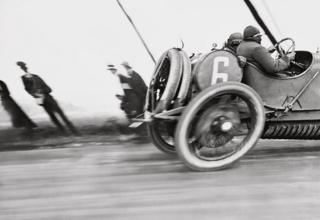
Impression caption ‘The French Grand Prix, Circuit de Dieppe, Normandy, 1912’, as captioned by LartigueLartigue often captured his subjects mid-gesture as in genuine everyday living, developing a new visual language for the 20th Century. Graphic copyright Jacques Henri Lartigue
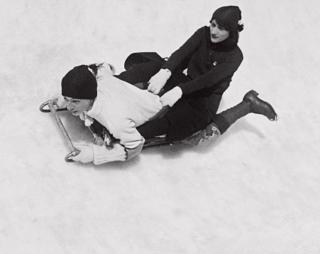
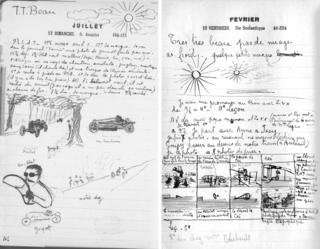
Graphic caption Zissou and Simone Roussel, St Moritz, 1913The guide by Louise Baring includes photographs, drawings and diary excerpts, revealing Lartigue’s prodigious talent, but also offering an adolescent viewpoint of Paris right before the outbreak of Environment War A single. Picture copyright Donation Jacques Henri Lartigue
Picture caption Webpages from Lartigue’s diary from 1913 (left) and 1911 (right)
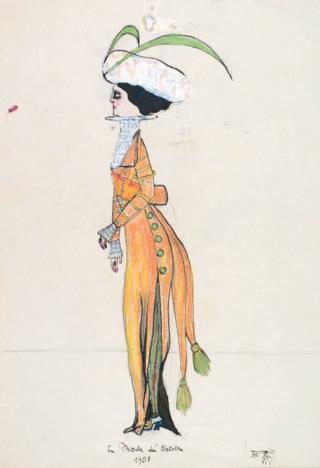
Graphic copyright Donation Jacques Henri Lartigue
Picture caption A vogue drawing by Lartigue, 1908 Late in his lifestyle, Lartigue was hailed as just one of the founders of present day pictures.
In 1963, the Museum of Modern-day Art in New York gave an exhibition of Lartigue’s work.
Fellow-photographer Richard Avedon wrote to him soon after looking at the exhibition: “It was one of the most shifting ordeals of my existence.
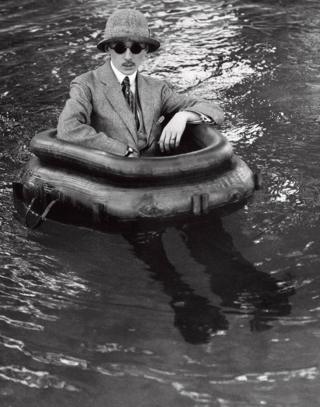
“You introduced me into your earth, and isn’t really that, immediately after all, the reason of artwork?” Picture copyright Jacques Henri Lartigue
from BBC News - World https://ift.tt/2W1ISNu
https://ift.tt/eA8V8J https://ift.tt/2W1ISNu Jacques Henri Lartigue documented La Belle Époque of France.


Post a Comment
If you have any doubt please let m know.